How Do You Choose the Right Type of Fencing for Your Property?
Matching Your Fence to the Purpose, Layout and Character of Your Property
Choosing a fence involves more than selecting a design that looks attractive. The right option should suit the way your outdoor space is used, provide the required level of privacy and withstand the conditions along the boundary.
Before deciding, consider what you need the fence to achieve. A front garden, private rear garden, driveway entrance and larger plot may each require a different solution. Assessing the boundary carefully helps ensure that the chosen fencing is both practical and visually appropriate.
Begin With the Main Purpose of the Fence
Identifying your main priority will make it easier to compare fencing types. Common reasons for installing a new fence include:
- Increasing garden privacy
- Creating a clearly defined boundary
- Making an outdoor space feel more secure
- Containing children or pets
- Separating different parts of a property
- Reducing unwanted noise
- Improving the appearance of the garden
- Replacing a weak or damaged fence
Some designs can fulfil several purposes, but one feature will usually be more important than the others.
Choose Solid Fencing for Greater Privacy
Solid fencing limits views into and out of a garden. It is often suitable for rear boundaries, seating areas and spaces where privacy is a priority.
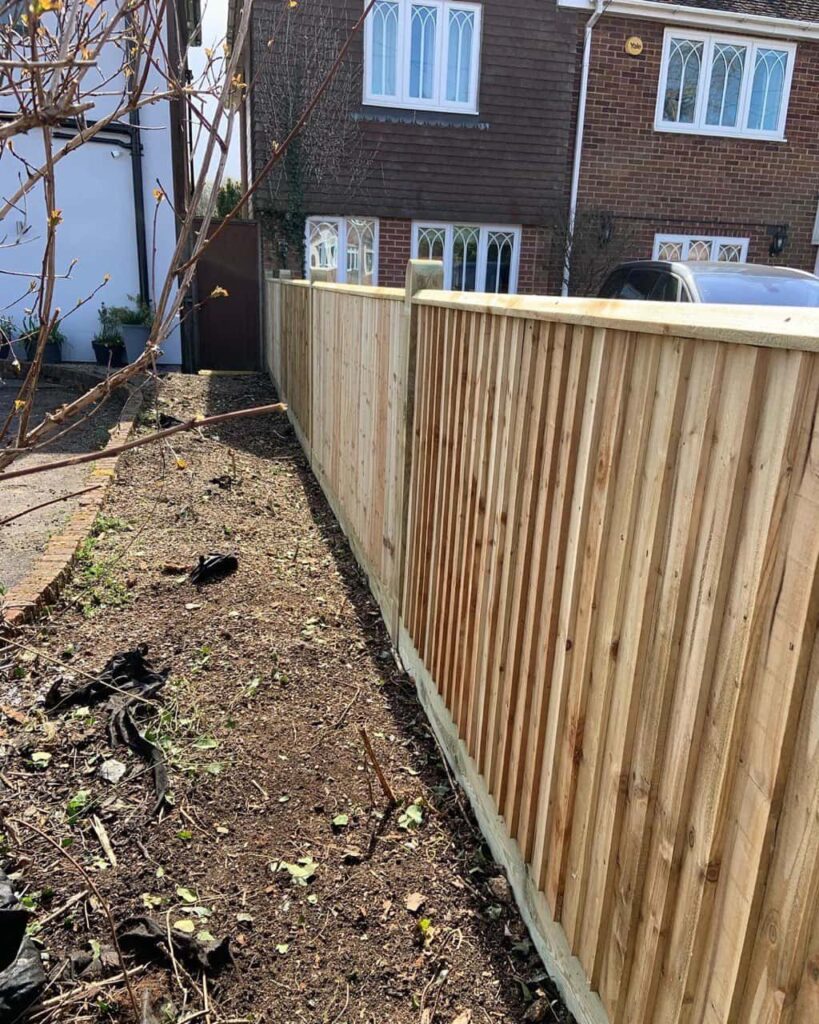
Wooden fence panels create a consistent appearance and can be installed between timber or concrete posts. Feather edge fencing is constructed from overlapping vertical boards and can be adapted to suit the length and levels of the boundary.
Whichever style is chosen, the strength of the posts and supporting rails is essential. A solid fence catches more wind than an open design, so its structure must be suitable for the site.
Consider Picket Fencing for Open Front Gardens
Picket fencing defines a boundary without completely enclosing the garden. Its open design allows light and views to pass through, helping the frontage retain a welcoming appearance.
The spacing, height and shape of the boards can be adjusted to suit the property. A matching pedestrian gate can create a coordinated entrance while maintaining a clear route to the front door.
This style works best where boundary definition and appearance are more important than complete privacy.
Use Post and Rail Fencing for Larger Areas
Post and rail fencing is a practical option for larger gardens, open land and boundaries where a solid barrier would feel unnecessarily heavy. Its horizontal rails create a clear division while preserving an open view.
Where smaller gaps are needed, suitable wire mesh can sometimes be added to the structure. The number of rails and spacing of posts should reflect the intended use and the conditions along the fence line.
Look at Stock Fencing for Practical Containment
Stock fencing is designed to create functional boundaries across fields and larger plots. The specification should be chosen according to what the fence needs to contain or exclude.
The quality of the installation is especially important over long distances. Correct tensioning, secure end posts and additional support at corners or changes in direction help the fence remain effective.
Consider Acoustic Fencing Where Noise Is a Concern
Acoustic fencing is designed to reduce the amount of sound passing through a boundary. It typically uses solid, carefully fitted boards that minimise gaps where noise could travel.
Its effectiveness depends on several factors, including:
- The position of the noise source
- The distance between the source and boundary
- The height and continuity of the fence
- Ground levels
- Openings around gates
- The route sound takes towards the property
A site assessment is important because acoustic fencing should be planned around the specific source and layout rather than treated as a standard panel fence.
Match the Fence to the Ground Conditions
The same fencing system may perform differently depending on where it is installed. Soft ground, slopes, exposed positions and areas that remain wet can all influence the most suitable post type and installation method.
Changes in level also affect the finished appearance. A fence may follow the slope, step down in sections or require a more tailored arrangement. Planning this before installation helps avoid awkward gaps and uneven panel lines.
Think About Wind Exposure
Wind places pressure on every fence, but solid designs experience greater forces because less air can pass through them. Boundaries in exposed positions may benefit from stronger posts, closer support or a design with controlled gaps.
Nearby buildings, walls and vegetation can also funnel wind towards particular sections. Corners and end posts often experience additional stress and should be detailed accordingly.
Coordinate Fencing With Gates and Access Points
Gates should be included in the initial design rather than added as an afterthought. Their width, position and direction of opening must suit how people and vehicles use the property.
Gate posts carry additional movement and weight, so they require secure installation. The gate style should also complement the surrounding fence to create a consistent boundary.
Consider Ongoing Maintenance
Timber fencing benefits from periodic checks and suitable treatment. Loose fixings, damaged boards and vegetation pressing against the fence should be addressed before they place additional strain on the structure.
Some designs offer easier access for replacing individual components, while others provide a more continuous finish. Choosing a fence you can maintain realistically will help it remain functional and attractive.
Why Professional Advice Is Valuable
It can be difficult to judge a fence solely from samples or photographs. A professional assessment takes account of the boundary length, ground conditions, exposure, access and intended purpose.
This allows the fencing type, post system, layout and gate positions to be considered together. Accurate setting out and secure installation are just as important as the materials in determining how well the finished fence performs.
Conclusion
The right fencing should match the purpose of the boundary, the level of privacy required and the conditions of the property. Solid panels and feather edge fencing provide greater screening, while picket and post and rail designs retain a more open appearance. Stock and acoustic fencing address more specialised requirements.
If you are considering new fencing in Biggen Hill, Bromley, Fast Fix Fencing Biggen Hill can assess your property and recommend a suitable design. Contact the team to discuss a professionally installed boundary tailored to your outdoor space.
Call us on: 01689 663 195
Click here to find out more about Fast Fix Fencing Biggen Hill
Click here to complete our contact form and see how we can help with your fencing needs.