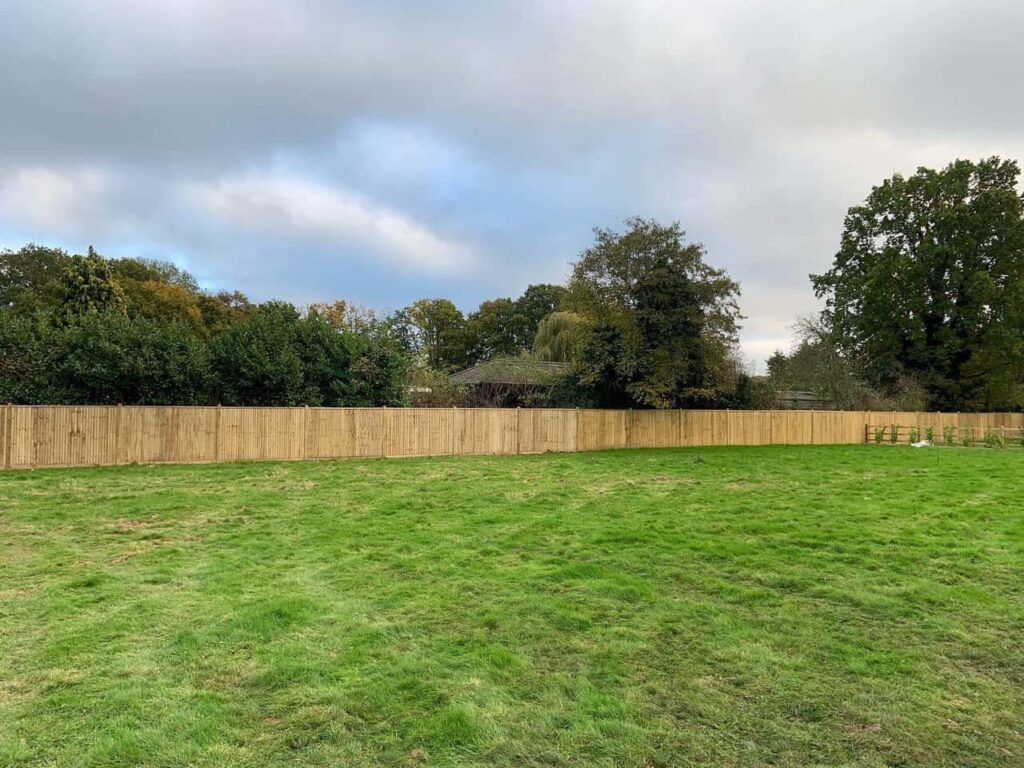
How Poor Installation Can Reduce the Effectiveness of Stock Fencing
Stock fencing is designed to create a practical and dependable boundary, particularly where animals need to be contained or particular areas need to be protected. Although the fencing material itself is important, its performance depends just as heavily on the way it is installed.
A high-quality stock fence can still perform poorly if posts are inadequately supported, the mesh is incorrectly tensioned or corners and changes in direction are not properly constructed. Problems that seem relatively minor immediately after installation can become increasingly noticeable once the fence is exposed to regular use, ground movement and changing weather conditions.
For property and landowners in Biggen Hill, Bromley, professional installation helps ensure that stock fencing is constructed as a complete system rather than simply attaching wire mesh between posts. Fast Fix Fencing Biggen Hill can assess the site and provide stock fencing suited to the layout, ground conditions and intended purpose of the boundary.
Why Does Stock Fencing Installation Matter So Much?
Stock fencing relies on several components working together.
The posts support the fence, the wire or mesh forms the barrier, strainers deal with tension, and appropriate construction around corners and changes in level helps maintain stability across the complete fence line.
If one element is poorly installed, it can affect neighbouring sections.
Effective Stock Fencing Depends On:
- Suitable fence positioning
- Secure posts
- Appropriate post spacing
- Strong straining points
- Correct wire tension
- Well-constructed corners
- Careful installation across uneven ground
- Secure gates and access points
Professional installation considers all of these factors before the fence is expected to perform its intended role.
1. Poorly Installed Posts Can Make the Fence Unstable
Fence posts form the structural support for stock fencing.
If they are inadequately installed, positioned inconsistently or unsuitable for the conditions, they may begin to lean or move.
Once posts start moving, maintaining the correct tension across the fencing becomes increasingly difficult.
Signs of Post Problems Can Include:
- Posts leaning away from the fence line
- Noticeable movement when pressure is applied
- Sections of fencing becoming loose
- Uneven fence height
- Increasing movement around corners
The fence may still remain standing, but its effectiveness as a dependable boundary can gradually decline.
2. Incorrect Wire Tension Can Reduce Performance
Stock fencing should not simply hang between posts.
Correct tension helps maintain the shape and position of the mesh along the fence line.
If the fencing is installed too loosely, it can sag and move excessively. If it is tensioned incorrectly, unnecessary strain can be placed on posts, fixings and other components.
Poor Tension Can Result In:
- Sagging sections
- An uneven appearance
- Reduced boundary definition
- Movement between posts
- Greater pressure on individual components
Achieving appropriate tension requires an understanding of the complete fence structure rather than pulling individual sections as tightly as possible.
3. Weak Straining Points Can Affect Long Sections
Straining posts are particularly important because they help manage the tension within the fencing.
If these points are insufficiently supported, the force created by the tensioned wire can gradually pull them out of alignment.
This can affect much more than the immediate area around the post.
A problem at one major straining point may allow an entire section of fencing to lose tension.
4. Corners Need Additional Consideration
A straight fence line behaves differently from one that changes direction.
At a corner, tension acts in different directions, placing particular demands on the supporting structure.
Poorly constructed corners can therefore become weak points.
A Problematic Corner May Show:
- Leaning posts
- Loose wire
- Changing fence alignment
- Gaps developing near the turn
- Movement spreading into adjoining sections
Professional stock fencing installation treats corners as important structural areas rather than simply another point along the boundary.
5. Incorrect Post Spacing Can Leave the Fence Poorly Supported
Posts need to provide appropriate support along the entire fence line.
If spacing is unsuitable, sections of mesh may have insufficient restraint between supporting points.
This can make the fencing more vulnerable to sagging and movement.
The correct arrangement should consider the type of fencing, terrain, direction changes and intended use rather than relying on arbitrary spacing across every site.
6. Uneven Ground Requires Careful Installation
Few boundaries are perfectly level.
Stock fencing may need to cross slopes, dips, rises and other changes in ground profile.
Simply installing the fence as though the ground were completely flat can leave unwanted gaps beneath the mesh or create inconsistent tension.
Poor Installation Across Uneven Ground Can Cause:
- Large gaps beneath the fence
- Sections sitting unnecessarily high
- Irregular mesh tension
- Poor alignment
- Areas that do not follow the boundary effectively
A professional installer can plan how the fencing should follow the ground while maintaining a practical and consistent barrier.
7. Gaps Beneath Stock Fencing Can Reduce Its Purpose
The bottom of the fence is particularly important where containment is the objective.
If the mesh sits too far above the ground in particular areas, gaps can undermine the effectiveness of the boundary.
Ground conditions need to be considered throughout installation, especially where the terrain rises and falls.
A fence that appears straight from a distance may still perform poorly if significant openings have been left underneath it.
8. Poor Fixings Can Allow Progressive Movement
The way stock fencing is attached to supporting posts also matters.
Fixings need to hold the fencing securely while working appropriately with the overall tension of the system.
If connections are inadequate, individual sections may begin moving or pulling away from their supports.
Small weaknesses can gradually become more significant as the fence experiences repeated movement and exposure.
9. Gates Can Become Weak Points
Access points need to work as part of the complete stock fencing system.
A well-installed fence can still become less practical if the gate area is poorly constructed.
Gate posts need appropriate support because opening, closing and repeated use place different demands on them compared with ordinary intermediate posts.
Gate Areas Should Provide:
- Stable supporting posts
- Suitable alignment
- Reliable closure
- Appropriate connection with adjoining fencing
- Practical access without weakening the boundary
A poorly aligned gate can also become increasingly difficult to operate if its supporting posts begin moving.
10. Failing to Consider the Purpose of the Fence Can Lead to the Wrong Installation
Stock fencing should be installed according to what the boundary is expected to achieve.
A fencing contractor should understand how the area will be used before determining the most appropriate installation approach.
Important considerations can include:
- What the fence needs to contain
- The length of the boundary
- Frequency of access
- Ground conditions
- Changes in direction
- Sloping sections
- Existing boundary features
A technically neat installation is of limited value if it does not perform the practical job required of it.
Why Ground Conditions Matter
Different ground conditions can influence how posts need to be installed and supported.
A method that works effectively in one section of a site may require adjustment where the ground changes.
Professional assessment before installation helps identify areas that may require particular attention rather than discovering weaknesses after the fence has been completed.
What Happens When One Post Starts Leaning?
One leaning post may initially appear to be an isolated problem.
However, stock fencing operates as a connected system.
Movement at one important supporting point can alter tension in the wire and place additional pressure on neighbouring sections.
The Problem Can Progress From:
- A post beginning to move.
- Wire tension becoming uneven.
- The mesh starting to sag.
- Adjacent components experiencing additional movement.
- A larger section requiring attention.
This is why apparently minor installation weaknesses should not always be viewed in isolation.
Why Simply Tightening Loose Stock Fencing May Not Work
When fencing begins sagging, tightening the wire might seem like the obvious solution.
However, the reason for the loss of tension needs to be identified first.
If a straining post has moved, simply increasing the wire tension could place even greater pressure on an already unstable component.
The correct repair may require stabilising or replacing supporting elements before the fence is tensioned again.
Can Poor Installation Shorten the Useful Life of Stock Fencing?
Yes. Components that are incorrectly installed can experience unnecessary movement and stress.
For example, inadequate posts may shift, loose mesh can move repeatedly, and poorly supported corners can gradually lose alignment.
Correct installation helps the different parts of the fence perform the roles for which they were intended.
This is important for maintaining a dependable boundary over the longer term.
Why Professional Site Preparation Adds Value
Installing stock fencing begins before the first post goes into the ground.
The proposed fence line should be assessed so that potential challenges can be identified.
Site Assessment Can Consider:
- Ground levels
- Changes in direction
- Sloping sections
- Existing obstacles
- Access points
- Gate positions
- Appropriate straining locations
Planning these details in advance can produce a more consistent installation and reduce the need to improvise important structural details during the work.
Signs Existing Stock Fencing May Have Been Poorly Installed
An existing fence may benefit from professional assessment if you notice:
- Persistent sagging
- Leaning posts
- Loose mesh
- Large gaps beneath the fence
- Unstable corners
- Misaligned gates
- Fence sections pulling away from posts
- Repeated loss of tension
- Significant differences in fence height
These symptoms do not necessarily mean the complete fence needs replacing. Some problems may be concentrated around particular supporting components.
Can Existing Stock Fencing Be Repaired?
In some circumstances, yes.
If much of the existing fencing remains serviceable, it may be possible to correct specific areas rather than replace everything.
The appropriate solution depends on what has caused the problem.
For example, correcting an unstable straining point is very different from dealing with widespread deterioration across the complete fence.
Professional assessment helps establish which components remain suitable and which require attention.
Why Professional Stock Fencing Installation Matters
A successful stock fence should be considered as a complete structural system.
Posts, strainers, mesh, fixings, corners and gates all need to work together.
Professional installation provides particular value by ensuring that the fence is designed around the site rather than simply assembled from individual components.
Attention to ground conditions, alignment, tension and structural support can make a significant difference to how effectively the finished fencing performs.
Stock Fencing in Biggen Hill
For property and landowners in Biggen Hill, Bromley, Fast Fix Fencing Biggen Hill provides professional fencing installation with careful attention to the practical requirements of each boundary.
Where stock fencing is required, the site can be assessed for ground conditions, changes in level, corners, access points and other features that may influence the installation.
The objective is to create a stable, appropriately tensioned and well-supported fence that performs effectively for its intended purpose.
Conclusion
Poor installation can significantly reduce the effectiveness of stock fencing, even when good-quality fencing materials have been used.
Inadequate posts, incorrect tension, weak straining points, poorly constructed corners and large gaps beneath the fence can all prevent the boundary from performing as intended. Because the different components work together, a weakness in one area can also begin affecting surrounding sections.
Professional installation helps ensure that the fencing is properly supported, appropriately tensioned and constructed around the actual conditions of the site.
If you require stock fencing in Biggen Hill, Bromley, Fast Fix Fencing Biggen Hill can assess your boundary and provide a professionally installed solution designed for stable, practical and dependable everyday use.
Call us on: 01689 663 195
Click here to find out more about Fast Fix Fencing Biggen Hill
Click here to complete our contact form and see how we can help with your fencing needs.